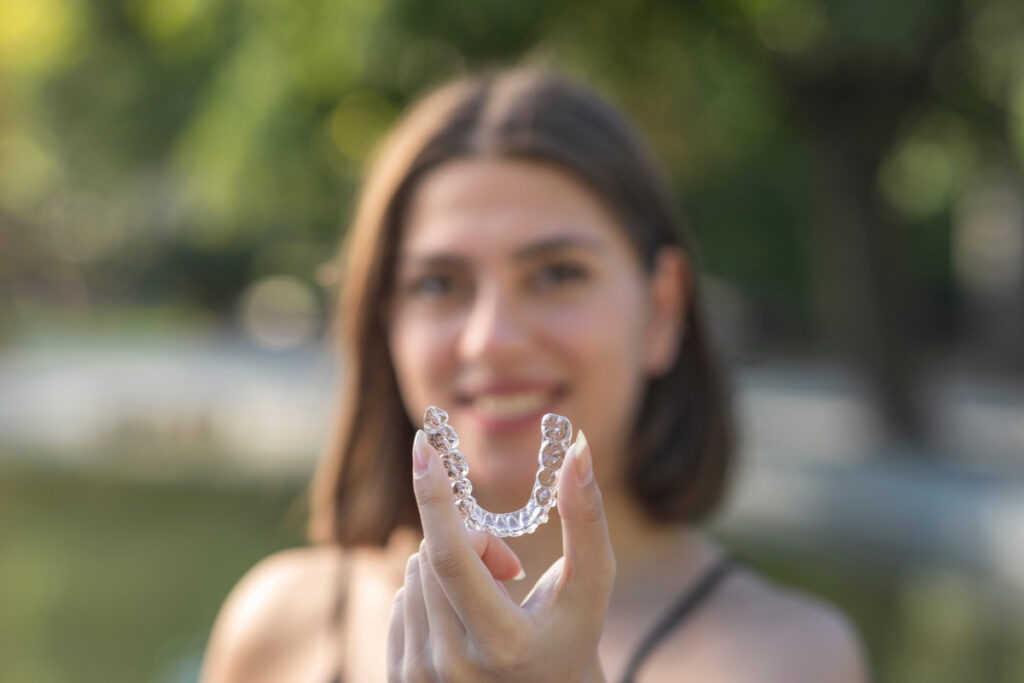
If your teeth are crowded, spaced apart, or slightly misaligned, you may wonder whether you need traditional braces to improve your smile. Invisalign in Groton, MA offers an alternative that uses a series of clear, removable aligners to gradually move teeth into more desirable positions.
Invisalign can address several common orthodontic concerns, but it is not the right solution for every dental or bite problem. Treatment depends on the severity and type of misalignment, your oral health, and your individual treatment goals. A dental evaluation can help determine whether clear aligners are appropriate for you.
Understanding what Invisalign can and cannot correct can help you decide whether clear aligner treatment is worth exploring.
What Is Invisalign?
Invisalign is an orthodontic treatment that uses a series of custom-made, clear aligners to gradually move teeth. Instead of using brackets and wires, the aligners fit over your teeth and are designed to apply controlled pressure to specific areas.
Each set of aligners is worn for a prescribed amount of time before progressing to the next set. As you move through the series, your teeth gradually shift according to the treatment plan created by your dental professional.
One of the main attractions of Invisalign is its discreet appearance. Because the aligners are clear, they can be less noticeable than traditional metal braces.
The aligners are also removable, allowing patients to take them out for eating, drinking, brushing, and flossing. However, consistent wear is important for treatment to progress as planned.
What Dental Problems Can Invisalign Fix?
Invisalign can address several common alignment and bite concerns. Depending on your individual case, treatment may help with:
- Crowded teeth
- Gaps between teeth
- Certain types of overbite
- Certain types of underbite
- Crossbite
- Mild to moderate tooth rotation
- General tooth misalignment
The exact problems that can be treated depend on the complexity of your case. Invisalign technology has developed significantly, but clear aligners are not appropriate for every orthodontic condition.
A consultation is important because your dentist or orthodontic provider needs to evaluate your teeth and bite before recommending treatment.
Could Invisalign in Groton, MA Be Right for You?
If you are considering clear aligners, Invisalign in Groton, MA at Smiles of Groton may be an option worth discussing with your dental team.
The practice provides Invisalign treatment for patients who want to improve the alignment of their teeth using clear, removable aligners. During a consultation, your dentist can evaluate your smile, discuss your concerns, and determine whether Invisalign is appropriate for your specific needs.
Treatment is personalized because every patient’s teeth and bite are different. The goal is not simply to make teeth look straighter. Your treatment plan should also take your bite, oral health, and long-term dental needs into consideration.
If you have been hesitant about orthodontic treatment because you do not want traditional metal braces, clear aligners may provide an alternative worth exploring.
Can Invisalign Fix Crowded Teeth?
Crowding occurs when there is not enough space for teeth to sit properly within the dental arch. Crowded teeth may overlap, rotate, or appear pushed forward or backward.
Invisalign can correct many cases of dental crowding by gradually moving teeth into better alignment.
However, the severity of crowding matters. Some patients may have mild crowding that can be addressed with clear aligners, while more complex cases may require a different orthodontic approach.
Straightening crowded teeth may also make daily brushing and flossing easier because properly aligned teeth can be easier to clean.
Your dentist can evaluate the amount of crowding and explain whether Invisalign is a suitable treatment option.
Can Invisalign Close Gaps Between Teeth?
Yes, Invisalign can be used to close certain spaces between teeth.
Gaps may occur for several reasons, including natural tooth spacing, differences in tooth size, or changes in tooth position. Clear aligners can gradually move teeth closer together according to a customized treatment plan.
However, not every gap should simply be closed. Your dentist will consider the underlying reason for the spacing before recommending treatment.
For example, a gap associated with gum disease or another oral health concern may need to be addressed before orthodontic treatment begins.
Can Invisalign Correct an Overbite?
An overbite occurs when the upper front teeth overlap the lower front teeth more than expected.
Some types of overbite can be improved with Invisalign. Treatment may involve moving the teeth and making carefully planned changes to their positions.
The severity and cause of the overbite are important factors. Some bite problems are more complex and may require treatment beyond clear aligners.
If you have an overbite, a dental evaluation can help determine whether Invisalign can address it or whether another orthodontic treatment would be more appropriate.
Can Invisalign Help With an Underbite?
An underbite occurs when the lower teeth extend in front of the upper teeth when the mouth is closed.
Some mild cases may be treated with clear aligners, depending on the underlying cause and the position of the teeth.
However, underbites can sometimes involve differences in jaw structure rather than tooth positioning alone. In those situations, Invisalign may not be sufficient by itself.
This is why an evaluation is essential before choosing clear aligners for an underbite.
Can Invisalign Correct a Crossbite?
A crossbite occurs when one or more upper teeth bite inside the lower teeth rather than outside them.
Certain types of crossbite can be addressed with clear aligners. Treatment depends on which teeth are affected and whether the problem is related primarily to tooth position or jaw structure.
Correcting a crossbite can help improve the relationship between the upper and lower teeth and may also make everyday oral hygiene easier.
Your dental provider can determine whether Invisalign is appropriate based on the specific characteristics of your bite.
Can Invisalign Fix Rotated Teeth?
Some teeth become rotated or twisted within the dental arch. Invisalign can correct certain types of tooth rotation by applying controlled pressure as part of a customized treatment plan.
The amount of rotation that can be corrected depends on the tooth involved and the severity of the rotation.
Your dentist will consider these factors when determining whether clear aligners can achieve the desired movement.
What Problems May Not Be Suitable for Invisalign?
Although Invisalign can address many common alignment concerns, it is not a universal solution.
Some complex orthodontic problems may require traditional braces, specialized orthodontic treatment, or other approaches. Severe jaw discrepancies, certain complex tooth movements, and some significant bite problems may fall outside the appropriate use of clear aligners.
The best treatment depends on your individual anatomy and dental needs.
A consultation can help you avoid choosing a treatment based solely on how discreet or convenient it appears.
What Are the Benefits of Invisalign?
For appropriate candidates, Invisalign offers several features that make it appealing.
Clear Appearance
The aligners are designed to be discreet, which can make them appealing to adults and teens who do not want noticeable metal braces.
Removable Design
Patients can remove their aligners for meals and oral hygiene. This allows them to continue brushing and flossing without working around fixed brackets and wires.
Customized Treatment
Invisalign treatment is planned around the patient’s specific dental needs. Each series of aligners is designed to guide teeth through a planned sequence of movements.
Everyday Convenience
Because the aligners are removable and relatively discreet, many patients find them convenient to incorporate into their daily routines.
However, convenience does not mean treatment requires no effort. Patients need to follow their provider’s instructions and wear their aligners consistently.
What Should You Know Before Starting Invisalign?
Before beginning treatment, your dentist will evaluate your teeth, gums, bite, and overall oral health.
If you have untreated cavities, gum disease, or other dental concerns, those issues may need to be addressed before orthodontic treatment begins.
You should also be prepared to follow your aligner wear schedule. Removing the aligners too frequently or failing to wear them as instructed can affect treatment progress.
Good oral hygiene is particularly important because food particles and plaque can become trapped against teeth when aligners are worn.
Your dentist will provide specific instructions about cleaning your aligners, caring for your teeth, and progressing through your treatment.
Why Is a Professional Orthodontic Evaluation Important?
Choosing an orthodontic treatment involves more than deciding whether you prefer clear aligners or traditional braces. A dentist or orthodontist needs to assess your tooth alignment, bite, and overall oral health before recommending a treatment approach. The National Institute of Dental and Craniofacial Research explains how misaligned teeth and jaws can affect oral health and why treatment may be considered. Understanding these factors can help you have a more informed conversation with your dental provider and choose an option that suits your needs.
Is Invisalign Right for Your Smile?
Invisalign can be an effective option for many patients with common alignment concerns, including certain cases of crowding, spacing, overbite, underbite, crossbite, and rotated teeth.
The important question is not simply whether Invisalign can move teeth. It is whether it can safely and effectively address your specific dental concerns.
At Smiles of Groton, the team can evaluate your smile and discuss whether Invisalign fits your needs and goals. If clear aligners are appropriate, your dentist can explain the expected treatment process and what you can do to achieve the best possible outcome.
If you have been considering orthodontic treatment but want a more discreet alternative to traditional braces, Invisalign may be worth discussing with your dental provider.
Ready to explore your options? Contact Smiles of Groton to schedule an Invisalign consultation and find out whether clear aligner treatment may be right for your smile.
Frequently Asked Questions
1. What dental problems can Invisalign fix?
Invisalign can address several common orthodontic concerns, including certain cases of crowded teeth, gaps, overbite, underbite, crossbite, and rotated teeth. Treatment suitability depends on the severity and cause of the problem.
2. Can Invisalign fix very crowded teeth?
Invisalign can correct many cases of dental crowding, but severe or complex crowding may require a different orthodontic approach. A dental evaluation can determine whether clear aligners are appropriate.
3. How long does Invisalign treatment take?
Treatment time varies from patient to patient. The duration depends on the complexity of the case, the amount of tooth movement needed, and how consistently the aligners are worn. Your dentist can provide a more specific estimate after evaluating your smile.
4. Can I eat while wearing Invisalign aligners?
Patients are generally instructed to remove Invisalign aligners before eating. After eating, brushing or cleaning the teeth before replacing the aligners can help maintain good oral hygiene.
5. Is Invisalign as effective as traditional braces?
Invisalign can effectively treat many orthodontic problems, but it is not suitable for every case. Traditional braces may be recommended for certain complex tooth movements or significant bite and jaw concerns. Your dentist can help you determine which approach is best for your needs.